There's nothing quite like opening the door and breathing fresh, clean,
air—but how clean is the air you're breathing right now? Unless
you're a scientist with a chemistry lab at your fingertips, there's
no real way of knowing. The gases you're sucking up through your nose
could be slowly killing you: according to the
World Health Organization,
around 4.2 million people die prematurely from the effects of polluted, outdoor air every single year,
while a further 3.8 million die due to dirty indoor air.
Air pollution is a huge problem—and not just for people living in smog-choked cities: through such things as global warming and damage to the ozone layer, it has the potential to affect us all. So what exactly causes this major
environmental issue and what can we do about it? Let's take a
closer look!
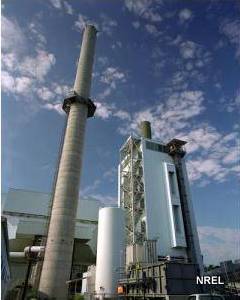
Photo: Air pollution is obvious when it pours from a smokestack (chimney), but it's
not always so easy to spot. This is an old photo of the kind of smoke that used to come from coal-fired power plants and, apart from soot (unburned carbon particles), its pollutants include sulfur dioxide and the greenhouse gas carbon dioxide. Thanks to tougher pollution controls, modern power plants produce only a fraction as much pollution. Modern pollution made by traffic consists of gases like nitrogen dioxide and "particulates" (microscopic soot and dust fragments) that are largely invisible.
Air lets our living planet breathe—it's the mixture of gases that fills the atmosphere, giving life to the plants and animals that make Earth
such a vibrant place. Broadly speaking, air is almost entirely made
up of two gases (78 percent nitrogen and 21 percent oxygen), with a
few other gases (such as carbon dioxide and argon) present in
much smaller quantities. [1]
We can breathe ordinary air all day long with no ill effects, so let's use that simple fact to define air pollution,
something like this:
Air pollution is a gas (or a liquid or solid dispersed through ordinary air)
released in a big enough quantity to harm the health of people or
other animals, kill plants or stop them growing properly, damage
or disrupt some other aspect of the environment (such as making buildings crumble),
or cause some other kind of nuisance (reduced visibility, perhaps, or an unpleasant odor).
As with water pollution and land contamination, it's the quantity (or
concentration) of a chemical in the air that makes the
difference between "harmless" and "pollution." Carbon
dioxide (CO2), for example, is present in the air around you
at a typical concentration of less than 0.05 percent and breathing
it in usually does no harm (you breathe it out all day long); but air with an extremely high
concentration of carbon dioxide (say, 5–10 percent) is toxic and could kill
you in a matter of minutes. [2]
Since Earth's atmosphere is very turbulent—many of us live in
windy countries—air pollution will often disperse relatively
quickly. In less enlightened times, factory operators thought that if
they built really high smokestacks, the wind would simply blow their smoke
away, diluting and dispersing it so it wouldn't be a problem. The
only trouble was, Earth is a much smaller place than we think
and pollution doesn't always disappear so conveniently. [3]
Sponsored links
Natural air pollution
When we think of pollution, we tend to think it's a problem that humans cause
through ignorance or stupidity—and that's certainly true, some
of the time. However, it's important to remember that some kinds of
air pollution are produced naturally. Forest fires, erupting
volcanoes, and gases released from radioactive decay of rocks inside Earth are just three examples of natural air pollution that can have hugely
disruptive effects on people and the planet.
Forest fires (which often start naturally) can produce huge swathes of smoke that drift
for miles over neighboring cities, countries, or continents. Giant
volcanic eruptions can spew so much dust into the atmosphere that
they block out significant amounts of sunlight and cause the entire
planet to cool down for a year or more. [4]
Radioactive rocks can release a gas called
radon
when they decay, which can build up in the basements of buildings
with serious effects on people's health
(each year, around 21,000 people die of lung cancer, due to radon gas, in the United States).
Photo: Forest fires are a completely natural cause of air pollution. We'll never be able
to prevent them breaking out or stop the pollution they cause; our best hope is to manage forests, where we can, so fires don't spread. Ironically, that can mean deliberately burning areas of forest, as shown here, to create firebreaks. Forests are also deliberately burned to regenerate ecosystems. Photo by courtesy of
US Fish and Wildlife Service.
All these things are examples of serious air pollution that happen without any help
from humans; although we can adapt to natural air pollution, and try to reduce the disruption it
causes, we can never stop it happening completely. For the rest of this article, we'll consider only the "unnatural" types
of pollution: the problems that people cause—and the ones we can solve.
Top-ten kinds of air pollution
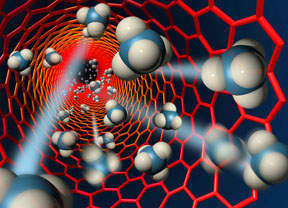
Photo: Flying molecules—if you could see air pollution close up, this is what it would look like. Image courtesy of US Department of Energy.
Any gas could qualify as pollution if it reached a high enough concentration to do harm. Theoretically, that means there are dozens of different pollution gases. It's important to note that not all the things we think of as pollution are gases: some are
aerosols (liquids or solids dispersed through gases). In practice, about ten different substances cause most concern:
Sulfur dioxide: Coal, petroleum, and other fuels are often impure and contain
sulfur as well as organic (carbon-based) compounds. When sulfur (spelled "sulphur" in some countries) burns with oxygen from
the air, sulfur dioxide (SO2) is produced. Coal-fired power plants are the world's biggest source of sulfur-dioxide air pollution, which contributes to smog, acid rain, and health problems that
include lung disease. [5]
Large amounts of sulfur dioxide are also produced by ships, which use dirtier
diesel fuel than cars and trucks. [6]
Carbon monoxide: This highly dangerous gas forms when fuels have too little
oxygen to burn completely. It spews out in car exhausts and it can
also build up to dangerous levels inside your home if you have a poorly maintained gas boiler,
stove, or fuel-burning appliance. (Always fit a carbon monoxide
detector if you burn fuels indoors.) [7]
Carbon dioxide: This gas is central to everyday life and isn't normally
considered a pollutant: we all produce it when we breathe out and
plants such as crops and trees need to "breathe" it in to grow.
However, carbon dioxide is also a greenhouse gas released by
engines and power plants. Since the beginning of the Industrial Revolution, it's been building up in Earth's atmosphere and contributing to the problem of global warming and
climate change. [8]
Nitrogen oxides: Nitrogen dioxide (NO2) and nitrogen oxide (NO) are
pollutants produced as an indirect result of combustion, when
nitrogen and oxygen from the air react together. Nitrogen oxide pollution comes from vehicle engines and power plants, and plays an important role in the formation of acid rain, ozone and smog. Nitrogen oxides are also "indirect greenhouse gases" (they contribute to global warming by producing ozone, which is a greenhouse gas). [9]
Volatile organic compounds (VOCs): These carbon-based (organic) chemicals evaporate
easily at ordinary temperatures and pressures, so they readily become gases. That's precisely why they're used as solvents in many different household chemicals such as paints, waxes, and varnishes. Unfortunately,
they're also a form of air pollution: they're believed to have long-term (chronic) effects on people's health and they
play a role in the formation of ozone and smog. VOCs are also released by tobacco smoke and wildfires.
[10]
Particulates: There are many different kinds of particulates, from black soot in diesel exhaust
to dust and organic matter from the desert. Airborne liquid droplets from farm pollution also count
as particulates. Particulates of different sizes are often referred to by the letters PM followed by a number, so PM10 means soot particles of less than 10 microns (10 millionths of a meter or 10µm
in diameter, roughly 10 times thinner than a thick human hair). The smaller ("finer") the particulates,
the deeper they travel into our lungs and the more dangerous they are.
PM2.5 particulates are much more dangerous (they're less than 2.5 millionths of a meter or about 40 times thinner than a typical hair). In cities, most particulates come from traffic fumes.
[11]
Ozone: Also called trioxygen, this is a type of oxygen gas whose molecules are made from three oxygen
atoms joined together (so it has the chemical formula O3), instead of just the two atoms in conventional oxygen (O2). In
the stratosphere (upper atmosphere), a band of ozone ("the ozone layer") protects
us by screening out harmful ultraviolet
radiation (high-energy blue light) beaming down from the Sun. At ground level,
it's a toxic pollutant that can damage health. It forms when sunlight strikes a cocktail of
other pollution and is a key ingredient of smog (see box below). [12]
Chlorofluorocarbons (CFCs): Once thought to be harmless, these gases were widely used in
refrigerators and aerosol cans until it was discovered
that they damaged Earth's ozone layer. We discuss this in more detail down below. [13]
Unburned hydrocarbons: Petroleum and other fuels are made of organic
compounds based on chains of carbon and hydrogen atoms. When they
burn properly, they're completely converted into harmless carbon dioxide and water; when they burn
incompletely, they can release carbon monoxide or float into the air in their unburned form, contributing to smog.
Lead and heavy metals: Lead and other toxic "heavy metals" can be spread into the air either as toxic compounds or as aerosols
(when solids or liquids are dispersed through gases and carried through the air by them) in such things as exhaust fumes and the
fly ash (contaminated waste dust) from incinerator smokestacks. [14]
What are the causes of air pollution?
Anything people do that involves burning things (combustion), using household or industrial chemicals
(substances that cause chemical reactions and may release toxic gases
in the process), or producing large amounts of dust has the potential
to cause air pollution. Step back a century or two and the cause of
most air pollution was easy to identify: filthy factories and power plants, driving
the Industrial Revolution. Today, better technology, tighter air pollution laws, greater
environmental awareness, and
determined campaigns mounted by local communities
make it far harder—though by no means impossible—for factories to pollute in post-industrial nations such
as the United States and Britain. But this type of "old-school" pollution remains a major problem
in rapidly industrializing nations such as China and India.
Where, then, does modern air pollution come from? In developed countries such as the United
States and the UK, by far the biggest culprit today is traffic, though power plants and factories continue to make an important
contribution. Before we start laying the blame for air pollution,
let's remember one very important thing: most of us drive (or travel
in) cars, use electricity, and buy goods made in factories. If we're
pointing fingers, ultimately we're going to have to point them at
ourselves.
Now let's look a bit more closely at these three key sources of air pollution.
There are over one billion cars on the road today (one for every two
people in rich countries such as the United States) and there will be
two billion by 2040. Despite the fast growing interest in electric cars, virtually all of the world's vehicles are currently powered by gasoline and diesel engines that burn petroleum to release energy. Petroleum is made up of hydrocarbons (large molecules built from hydrogen and
carbon) and, in theory, burning them fully with enough
oxygen should produce nothing worse than carbon dioxide and water. In
practice, fuels aren't pure hydrocarbons (they contain extra chemicals called "additives")
and engines don't burn them cleanly. As a result, exhausts from engines contain all kinds of
pollution, notably particulates (soot of various sizes), carbon
monoxide (CO), nitrogen oxides (NOx), volatile
organic compounds (VOCs), and lead—and indirectly produce
ozone. Mix this noxious cocktail together and energize it with
sunlight and you get the sometimes brownish, sometimes blueish
fog of pollution we call smog, which can hang over cities for days on end.
Vehicles don't release pollution only from their tailpipes. Brake and tire wear and tear, the slow rubbing away
of the road surface as tires rumble over it, and stirring up of the dust and debris on top of it also release significant amounts of PM10 and PM2.5 particulates into the air. [15]
Sponsored links
Smog—a closer look
Smog isn't the stuff that pumps from a car's tailpipe or drifts from a
factory smokestack—it's the nasty brown or blue haze that builds up
over a city as a result.
Smog (a combination of the words "smoke" and "fog")
forms when sunlight acts on a cocktail of pollutant gases such as
nitrogen and sulfur oxides, unburned hydrocarbons, and carbon
monoxide; that's why it's sometimes called photochemical smog
(the energy in light causes the chemical reaction that makes smog).
One of the most harmful constituents of smog is a toxic form of oxygen called
ozone, which can cause serious breathing difficulties and even,
sometimes, death. When smog is rich in ozone, it tends to be a
blueish color, otherwise it's more likely to be brown.
Although smog can happen in any busy city, it's a particular problem in places such
as Los Angeles where the local climate (influenced by the ocean and
neighboring mountains) regularly causes what's known as a temperature inversion.
Normally, air gets colder the higher up you go but in a temperature inversion the opposite
happens: a layer of warm air traps a layer of cold air nearer the ground.
This acts like a lid over a cloud of smog and stops it from rising
and drifting away. Largely because of their traffic levels,
smog afflicts many of the world's busiest cities, including
Athens,
Beijing,
Delhi,
Madrid,
Mexico City,
Milan,
Paris,
and
Tokyo.
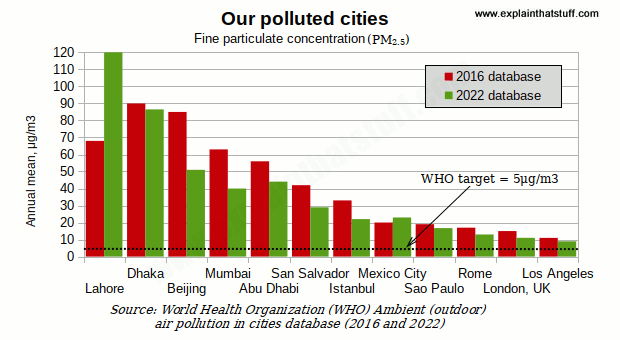
Chart: Most of the world's major cities routinely exceed World Health Organization (WHO) air pollution guidelines, though progress is being made: you can see that the 2022 figures (green) show a marked improvement on
the 2016 ones (orange) in almost every case.
This chart compares annual mean PM2.5 levels in 12 representative cities around the world with the recently revised (2021) WHO guideline value of 5μg per cubic meter (dotted line). PM2.5
particulates are those smaller than 2.5 microns and believed to be most closely linked with adverse health effects.
For more about this chart and the data sources used, see note [22].
Power plants
Renewable energy sources such as
solar panels and
wind turbines are helping us
generate a bigger proportion of our power every year, but the
overwhelming majority of electricity
(about two thirds in the United States) is still produced by burning fossil fuels
such as coal, gas, and oil, mostly in conventional power plants. Just
like car engines, power plants should theoretically produce nothing
worse than carbon dioxide and water; in practice, fuels are dirty and they don't burn
cleanly, so power plants produce a range of air pollutants, notably
sulfur dioxide, nitrogen oxides, and particulates. (They also
release huge amounts of carbon dioxide, a key cause of global warming and
climate change when it rises and accumulates in the atmosphere. We discuss this a bit more down below.)
Industrial plants and factories
Plants that produce the goods we all rely on often release small but significant
quantities of pollution into the air. Industrial plants that produce
metals such as aluminum and
steel, refine petroleum,
produce cement, synthesize plastic, or make other chemicals are among
those that can produce harmful air pollution.
Most plants that pollute release small amounts of pollution continually over a long
period of time, though the effects can be cumulative (gradually building up).
Sometimes industrial plants release huge of amounts of air pollution accidentally in
a very short space of time. One notable case happened
in Bhopal, India in December 1984, when a large chemical plant run by
the Union Carbide company released a poisonous gas (methyl isocyanate) that hung over the local area, killing around
3000 people and injuring thousands more. (Wikipedia's article on the
Bhopal Disaster
gives a comprehensive account of what happened.)
Photo: Smokestacks billowing pollution over Moscow, Russia in 1994. Factory pollution is much less of a problem than it used to be in the world's "richer" countries—partly because a lot of their industry has been exported to nations such as China, India, and Mexico. Photo by Roger Taylor courtesy of US DOE National Renewable Energy Laboratory (NREL).
Other causes of air pollution
Although traffic, power plants, and industrial and chemical plants produce the
majority of Earth's outdoor air pollution, many other factors
contribute to the problem. The causes of indoor air pollution are very different.
In many parts of the world, people still
rely on burning solid fuels (such as wood, coal, and animal dung) for their cooking and heating, and that
produces indoor air pollution that can seriously harm their health
(cleaner cookstoves, including solar cookers, are the solution to that problem).
But even in richer countries, the fashion for sitting cosily round wood-burning stoves
has spawned both a "new" form of air pollution—and a throwback to an
age when people didn't know any better.
(In the UK, for example, woodburners produce 2.4 times more PM2.5 particulate pollution
than traffic, while in Sydney, Australia they cause three quarters of all particulate pollution.
[21])
In some areas, garbage is incinerated instead of being recycled or landfilled and that can also produce significant air pollution unless the incinerators are properly designed to operate at a high enough temperature (even then, there is a toxic residue left behind that
must be disposed of somehow).
What effects does air pollution have?
Air pollution can harm the health of people and animals, damage crops or
stop them growing properly, and make our world unpleasant and
unattractive in a variety of other ways.
Human health
We know air pollution is a bad thing without even thinking about it. Have you
ever coughed when a truck drove past belching out its sooty
exhaust? Instinctively, you cough to clear your lungs and protect
your body and you might even cover your face with your handkerchief
or sleeve to filter the air until it feels safe to breathe deeply
again. You don't have to be told that pollution like this might harm your health to want to steer
clear of it: your body takes action automatically. The only trouble is, we can't always see or
smell air pollution, tell when it's affecting us, or know how it
might harm us days, months, or even years in the future.
It's no big surprise that air pollution is linked to respiratory (breathing) problems such as asthma and pneumonia.
But medical research has now connected it to a huge range of other health problems, including heart disease, strokes, high blood pressure, diabetes, dementia, fertility problems, various cancers, cataracts, and all sorts of birth-related problems (including miscarriages and low-birth weight). [16]
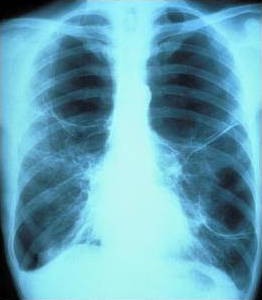
Photo: Air pollution can cause a variety of lung diseases and
other respiratory problems. This chest X ray shows a
lung disease called emphysema in the patient's left lung.
A variety of things can cause it, including smoking and exposure to air pollution.
Photo courtesy of National Heart, Lung and Blood Institute (NHLBI) and
National Institutes of Health.
Sometimes the connection between air pollution and human health is
obvious, as in the Bhopal Disaster.
Another notable incident happened in London, England in 1952 when thick, deadly pollution known
as the Great Smog, caused by
people burning coal in home fires and coal-fired power plants, killed over
4000 people (the official death toll at the time, though later estimates suggest many more). [17]
Other times, it's much more difficult to make the link.
Rough estimates suggest perhaps 10–20 percent of certain
cancers are caused by
air pollution of one kind or another, but cancers can take a long
time to develop and many other things can cause them too. Proving
a direct link with a particular kind of air pollution (say, a garbage
incinerator in your community or a neighbor who persistently burns
plastic on garden bonfires) is very difficult.
"In 2016, 91% of the world population was living in places where the WHO air quality guidelines levels were not met."
According to the World Health Organization (WHO), air pollution is one of the
world's biggest killers:
outdoor (ambient) pollution causes around four million people to die
prematurely each year, while
indoor (household) pollution (mainly from fuel burning) kills
another 3.8 million. Many of these deaths happen in less-developed or developing
countries (over 2.3 million in India and 1.8 million in China alone), but wealthier
industrial nations suffer too: in the United States, for example,
around 200,000 people a year are estimated to die early because of air
pollution. Imagine how much media coverage there would be if several
million people (that's roughly the population of Houston, Texas or
the West Midlands conurbation in England) were killed in a terrorist
incident or an earthquake. Because air pollution kills quietly and
relentlessly, and its finger is hard to detect on the trigger, people
barely seem to notice—or care.
Deaths aren't the only human consequence of air pollution. For every person
who dies, hundreds or thousands more suffer breathing problems such
as asthma and bronchitis. Workers exposed to high levels of dust sometimes suffer
years of misery before dying from illnesses such as silicosis. And though we naturally expect air pollution to cause respiratory diseases, it's crucial to note
that its effects are very much more widespread. According to a recent review by Professor Dean Schraufnagel of the University of Illinois at Chicago, and a team of medical experts from around the world: "Although air pollution is well known to be harmful to the lung and airways, it can also damage most other organ systems of the body."
Agricultural effects
Farming is as much of an art as a science; crops can thrive—or fail—for all
sorts of reasons. One of the things that characterized the 20th
century was the huge growth in
industrial agriculture—using
fertilizers, pesticides, and so on to increase crop yields and feed
the world's ever-growing population. These aren't the only chemicals
that crops are exposed to, however. We know that air pollution (in
common with water pollution) can seriously affect the growth of
plants. At one end of the spectrum, it's easy to find chemical
residues (everything from toxic heavy metals such as lead to
cocktails of brake fluids and other chemicals) in plants that grow
alongside highways. At the opposite extreme, the huge increase in
atmospheric carbon dioxide now causing global warming and climate
change is expected to have a major impact on the world's agriculture
(reducing crop yields in some places but potentially increasing yields
elsewhere). Somewhere in between those local and global impacts,
air pollutants such as ozone can have a dramatic, regional effect on crop yields.
Other effects
Photo: For many years, the stonework on the Parthenon in Athens, Greece has been blackened by particulates from traffic pollution, but other sources of pollution, such as wood-burning stoves,
are increasingly significant. Photo by Michael M. Reddy courtesy of
U.S. Geological Survey.
Wander the streets of a big city and you'll notice quite quickly how dirty the
buildings look, even in areas where there are no factories or power
plants. Exhaust fumes from traffic are generally to blame. Apart from
blackening buildings with soot, they also contribute to acid rain
(see below) that can wear away stonework in a matter of years or
decades. If you look through UNESCO's list of World Heritage Sites,
you'll find air pollution is a major menace that affects some of
the world's most prizes historic places, from the
Taj Mahal (India) and the
Acropolis (Greece)
to the Colosseum (Rome) and the
Leshan Buddha (China).
Sponsored links
How air pollution works on different scales
Air pollution can happen on every scale, from the local to the global.
Sometimes the effects are immediate and happen very
near to the thing that caused them; but they can also happen days,
months, or even years later—and in other cities, countries, or continents.
Local air pollution
Have you ever sat on a train with someone who suddenly decided to start
cleaning or varnishing their nails? Acetone
(a solvent in nail varnish remover) is a VOC (volatile organic compound), so it
evaporates and spreads very quickly, rapidly getting up the nose of
anyone sitting nearby. Open a can of gloss paint in your home and
start painting a door or window and your house will very quickly fill
with a noxious chemical stench—VOCs again! Grill some toast too long and you'll
set the bread on fire, filling your kitchen with clouds of soot (particulates) and
possibly setting off a smoke alarm or
carbon monoxide detector. These are three everyday examples of
how air pollution can work on a very local scale: the causes
and the effects are close together in both space and time. Localized
air pollution like this is the easiest kind to tackle.
Indoor air pollution
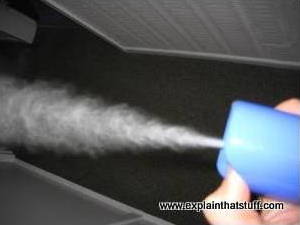
Photo: Air freshener—or air polluter?
If you live in a city, you might think your home is the cleanest place you
can be—but you're probably wrong. Outside, though
the air may seem polluted, it's constantly moving and (in theory at
least) pollutants are continually being diluted and dispersed.
Inside, your home is packed with all kinds of chemicals that generate
pollution every time you use them. And, unless you open the windows regularly, those
pollutants aren't going anywhere fast:
Detergents and household cleaners,
aerosol sprays, shoe polish, hair wax,
paints, and glues are just a
few of the everyday chemicals that can release air pollution into
your home.
If you have a gas or oil-fired boiler or a coal- or wood-
fired stove and it's not properly ventilated, it will generate
dangerous and toxic (but colorless and odorless) carbon monoxide gas.
Surprisingly, even the water that pipes into our homes can be
a source of air pollution. Every time you heat water (on a
stove, in a kettle, in a shower, or even when you're steam ironing
clothes), you can evaporate VOC chemicals trapped inside and release
them into the air.
Even your shiny new shower curtain could be releasing VOCs if it's made from a type of plastic called PVC.
Maybe your building has air conditioning? Chances
are, the air it blows through has already circulated through other rooms in
the same building or even other people's offices or apartments.
Perhaps your building is located somewhere near a source of natural radioactivity so radon gas is slowly accumulating inside?
None of these things are meant to scare you—and nor should they. Just
remember that there's pollution inside your home as well as outside
and keep the building well ventilated. (If you're worried about wasting energy by
opening windows on cold days, there are systems that can let air into a building without
letting the heat escape, known as
heat-recovery ventilation.)
Further reading
Indoor air quality: Comprehensive information from the US Environmental Protection Agency (EPA).
How clean your air is depends on where you live: air is generally far cleaner
in rural than in urban areas, for example, where factories, chemical
plants, and power plants are more likely to be located and traffic
levels are much higher. Exactly how clean your neighborhood is can
also depend critically on the weather, especially if you live somewhere
prone to temperature inversions and smog. Neighborhood air pollution problems
are often best tackled through local community campaigns.
Regional air pollution
Tall smokestacks designed to disperse pollution don't always have that
effect. If the wind generally blows in the same direction, the
pollution can be systematically deposited on another city, region, or country downwind.
Sometimes air pollution is carried back down to Earth as contaminated rain or snow, which
dissolves in watercourses or oceans causing what's known as
atmospheric deposition. In other words, the
air pollution becomes water pollution.
According to the US Environmental Protection Agency (EPA): "The air is a major source of chemicals affecting the health of the Great Lakes. Certain persistent air toxics may contribute not only to atmospheric pollution but to water pollution. These toxics can bioaccumulate in the food web [and] may endanger the environment, affecting the health of humans and wildlife." Acid rain (see box below) is the best known example of atmospheric deposition.
It's often said that pollution knows
no boundaries—and that's particularly true of air pollution, which
can easily blow from one country or continent where it's produced and
cause a problem for someone else. Air pollution that travels like
this, from country to country, is called transboundary pollution;
acid rain is also an example of this and so is radioactive fallout
(the contaminated dust that falls to Earth after a nuclear explosion).
When the Chernobyl
nuclear power plant exploded in the Ukraine in
1986, wind dispersed the air pollution it produced relatively
quickly—but only by blowing a cloud of toxic radioactive gas over
much of Europe and causing long-lasting problems in a number of other
countries (70 percent of the fallout landed on neighboring Belarus).
Acid rain—a closer look
When rain falls through polluted air, it can pick up some of the pollution
and turn more acidic—producing what's known as
acid rain. Simply speaking, the air pollution converts the rain
into a weak acid.
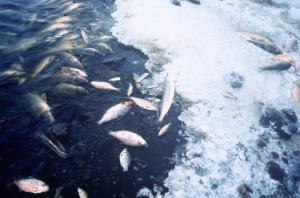
Photo: Acid rain can turn lakes so acidic that fish no longer survive.
Picture courtesy of U.S. Fish and Wildlife Service Division of Public Affairs.
Why does that matter? Pure water is neither acidic nor alkaline but
completely neutral (we say it has an acidity level or pH of 7.0).
Ordinary rainwater is a little bit more acidic than this with about
the same acidity as bananas (roughly pH 5.5), but if rain falls
through sulfur dioxide pollution it can turn much more acidic (with a
pH of 4.5 or lower, which is the same acidity as orange or lemon
juice). When acid rain accumulates in lakes or rivers, it gradually
turns the entire water more acidic. That's a real problem because fish
thrive only in water that is neutral or slightly acidic (typically with a pH of
6.5–7.0). Once the acidity drops below about pH 6.0, fish soon start
to die—and if the pH drops to about 4.0 or less, all the fish will be killed.
Acid rain has caused major problems in lakes throughout North America and
Europe. It also causes the death of forests, reduces the fertility of
soil, and damages buildings by eating away stonework (the marble on the
US Capitol in Washington, DC
has been eroded by acid-rain, for example).
One of the biggest difficulties in tackling acid rain is that it can happen over
very long distances. In one notable case, sulfur dioxide air
pollution produced by power plants in the UK was blamed for causing
acid rain that fell on Scandinavian countries such as Norway, producing widespread
damage to forests and the deaths of thousands of fish in acidified
lakes. The British government refused to acknowledge the problem and
that was partly why the UK became known as the "dirty man of Europe" in the 1980s and 1990s.
[18]
Acid rain was a particular problem in the last 30–40 years of the 20th century. Thanks to the decline
in coal-fired power plants, and the sulfur dioxide they spewed out, it's less of a problem for western countries
today. But it's still a big issue in places like India, where coal remains a major source of energy.
Global air pollution
It's hard to imagine doing anything so dramatic and serious that it would
damage our entire, enormous planet—but, remarkable though it may
seem, we all do things like this everyday, contributing to problems such as global warming
and the damage to the ozone layer (two separate issues that are often confused).
Global warming
Every time you ride in a car, turn on the lights, switch on your
TV, take a shower, microwave
a meal, or use energy that's come from burning a fossil fuel such as oil,
coal, or natural gas, you're almost certainly adding to the problem of global
warming and climate change: unless it's been produced in some
environmentally friendly way, the energy you're using has most likely
released carbon dioxide gas into the air. While it's not an obvious
pollutant, carbon dioxide has gradually built up in the atmosphere,
along with other chemicals known as greenhouse gases.
Together, these gases act a bit like a blanket surrounding our planet
that is slowly making the mean global temperature rise, causing the
climate (the long-term pattern of our weather) to change, and producing a
variety of different effects on the natural world, including rising sea levels. Read more in our
main article about global warming and
climate change.
Ozone holes
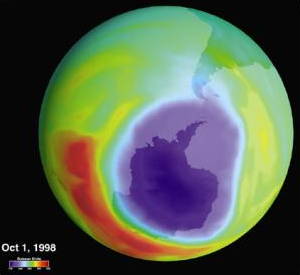
Photo: Global air pollution: The purple area is the huge hole in the ozone layer over Antarctica caused
by CFC chemicals in aerosol sprays and refrigerants. Picture courtesy of
NASA on the Commons.
Global warming is a really dramatic effect of air pollution produced by
humans, but that doesn't mean it's an insoluble problem. People have
already managed to solve another huge air pollution problem that
affected the whole world: the damage to a part of the atmosphere
called the ozone layer. At ground level, ozone is an air
pollutant—but the ozone that exists in the stratosphere (high up in the atmosphere), is
exactly the opposite: it's a perfectly natural chemical that protects
us like sunscreen, blocking out some of the Sun's harmful
ultraviolet radiation.
During the 20th century, people started using large quantities of
chemicals called chlorofluorocarbons (CFCs), because they worked very
well as cooling chemicals in refrigerators and propellant gases in
aerosol cans (propellants are the gases that help to fire out air freshener, hair
spray, or whatever else the can contains). In 1974, scientists
Mario Molina and Sherwood Rowland suggested that chlorofluorocarbons attacked and destroyed the
ozone layer, producing holes that would allow dangerous
ultraviolet light to stream through. In the 1980s, huge "ozone holes" started to appear over Antarctica,
prompting many countries to unite and sign an international agreement called
the Montreal Protocol, which rapidly phased out the use of CFCs. As a result, the
ozone layer—though still damaged—is
expected to recover by around 2060–2080.
How can we solve the problem of air pollution?
As we discovered in the last section, air pollution means different
problems at different scales—in other words, it's not one single
problem but many different ones. Solving a problem like passive
smoking (how one person's cigarette smoke can harm other people's
health) is very different to tackling a problem like global warming,
though both involve air pollution and they do have some things in
common (both problems, for example, require us to think about how our
behavior can affect other people in the short and long term and to
act more considerately). Generally, air pollution is tackled by a
mixture of technological solutions, laws and regulations, and changes
in people's behavior.
Technological solutions
It's very easy to criticize power plants, factories, and vehicles that belch
polluting gases into the atmosphere, but virtually all of us rely
on these things—ultimately, we are the people polluting.
Solving air pollution is also a challenge because many people have a
big investment in the status quo (carrying on with the world much
as it is today). For example, it's easier for car makers to keep on
making gasoline engines than to develop
electric cars or ones powered
by fuel cells that produce less pollution. The world has thousands of
coal-fired power plants and hundreds of nuclear power stations and,
again, it's easier to keep those going than to create an entirely new
power system based on
solar panels,
wind turbines,
and other forms of
renewable energy (though that is happening steadily).
Growing awareness of problems such as air pollution and global warming is slowly
forcing a shift to cleaner technologies, but the world remains firmly locked in
its old, polluting ways.
Let's be optimistic, though. Just as technology has caused the problem of air pollution, so it can provide
solutions. Cars with conventional gasoline engines are now routinely
fitted with catalytic converters that remove some (though not all) of
the pollutants from the exhaust gases. Power plants are fitted with
electrostatic smoke precipitators that use static electricity to
pull dirt and soot from the gases that drift up smokestacks; in
time, it's likely that many older power plants will also be retro-fitted with
carbon capture systems that trap carbon dioxide to help reduce global warming.
On a much smaller scale, environmentally friendly people who want to ventilate their homes
without opening windows and wasting energy can install
heat-recovery ventilation
systems, which use the heat energy locked in outgoing waste air to
warm fresh incoming air. Technologies like this can help us live
smarter—to go about our lives in much the same way with far less
impact on the planet.
Photo: Pollution solution: an electrostatic smoke precipitator helps to prevent air pollution from this smokestack at the McNeil biomass power plant in Burlington, VT. Photo by Warren Gretz courtesy of US DOE National Renewable Energy Laboratory (NREL).
Laws and regulations
By itself, technology is as likely to harm the environment as to help
it. That's why laws and regulations have been such an important part
of tackling the problem of pollution. Many once-polluted cities now
have relatively clean air and water, largely thanks to anti-pollution
laws introduced during the mid-20th century. In England, following
the 1952 smog tragedy that killed thousands in the capital city of
London, the government introduced its Clean Air Act of 1956, which
restricted how and where coal could be burned and where furnaces could
be sited, and forced people to build smokestacks higher to disperse
pollution. [19]
In the United States, a series of Clean Air Acts were
passed between the 1960s and 1990s. The 1990 Pollution Prevention Act
went even further, shifting the emphasis from cleaning up pollution
to preventing it ever happening in the first place. [20]
National laws are of little help in tackling transboundary pollution (when air
pollution from one country affects neighboring countries or
continents), but that doesn't mean the law is useless in such cases.
The creation of the European Union (now comprising around 30 different
countries) has led to many Europe-wide environmental acts, called
directives.
These force the member countries to introduce their own, broadly similar, national environmental laws
that ultimately cover the entire European region.
For example, the 1976 European Bathing Water Directive tried to enforce minimum standards of
water quality for beaches and coastal areas across Europe to reduce
pollution from sewage disposal, while the 1996 European Directive on Integrated Pollution Prevention and Control (IPPC)
(overhauled in 2008) attempted to limit air and water pollution from industry.
Other successful international laws include the
Convention on Long-Range Transboundary Air Pollution (1979), which has helped to
reduce sulfur dioxide emissions from power plants and, of course, the
Montreal Protocol, which successfully brought 196 countries together to target ozone depletion. Unfortunately, attempts to control global warming through international laws
and agreements have so far proved less successful.
Raising awareness and changing behavior
Clean technologies can tackle dirty technologies, and laws can make
polluters clean up their act—but none of this would happen
without people being aware of pollution and its damaging effects.
Sometimes it takes horrific tragedies
(like the 1952 smog episode in London or the Chernobyl catastrophe)
to prompt action. Often, we pollute the environment without
even realizing it: how many people know that taking a shower
or ironing a shirt can release indoor air pollution from
hot water that they immediately breathe in, for example?
Helping people to understand the causes and effects of pollution and
what they can do to tackle the issue is very important—that's why
I'm writing these words now and probably why you're reading them. Air
pollution isn't someone else's problem: all of us help to cause it
and we can all help to clean it up. Starting now!
What can you do to help reduce air pollution?
Photo: Buying organic food reduces the use of sprayed pesticides and other chemicals, so it
helps to reduce air (as well as water) pollution.
So now you know the problems, but what's the solution? Here are ten simple
things you can do that will make a difference (however small) to the
problem of air pollution.
Save energy: Making electricity in conventional power plants generates
pollution, so anything you can do to save energy will help to reduce
pollution (and global warming as well). Switch to low-energy lamps, use a laptop computer instead of a desktop, dry your clothes outdoors, and
heat insulate
your home. Sounds too worthy? Just remember this: every bit of energy you save also saves you
money you can spend on something better! If you're not sure how you're wasting
energy, use an electricity monitor to help identify your most inefficient appliances.
Save water when you can: Producing cool, clean water needs huge amounts
of energy so cutting water waste is another good way to save energy
and pollution.
Cut the car: Sometimes we have to use cars, but often
we can get a bus or a train or (for shorter distances) walk or cycle.
Road vehicles are now the biggest source of air pollution in most urban areas, so traveling
some other way through a town or city helps to keep the air clean.
When you have to use your car, drive efficiently to save fuel
and money, and cut pollution. It's particularly important to avoid car use when smog is bad in your city.
Cut out garden bonfires: Did you know that a garden bonfire can contain
up to 350 times as much of the cancer-causing chemical benzo[a]pyrene as
cigarette smoke? Well you do now! Having a bonfire is one of the
most selfish things you can do in your local neighborhood. Compost
your garden refuse, bury it, or take it to a municipal waste dump.
Never burn household waste: If you burn plastic, you release horrible
toxic chemicals into the local environment, some of which will be
sucked up your own nose! Recycle your trash instead.
Garden organically: Would you spray pesticides on your dinner? So why spray
them on your garden? You can tackle virtually all garden pests and
diseases in more environmentally friendly organic ways. Buying
organic food is a good option if you can't grow your own.
Cut the chemicals: Do you really need to spray an air freshener to make
your home feel nice? Yes, you fill your room with perfume, but
you're also choking it with chemical pollution. Why not just open a
window instead? How many of the chemicals you buy do you really need
to use? Why not try cleaning with microfiber cloths instead of using
detergents?
Use water-based paints and glues: Avoid the nasty solvents in
paints, varnishes, and wood preservatives.
Remember that if anyone's going to suffer from the air pollution they create, you're first in line.
Get in the habit of reading the labels on the DIY products you buy. If you live in Europe, you'll
find a little badge on them somewhere indicating what sort of VOC emissions they make.
Reduce, reuse, and recycle: Buying new stuff is fun, but reusing old things
can be just as good.
Don't smoke: Cigarettes contain an addictive chemical called nicotine that
makes you want to go on smoking them. The smoke itself contains
about 7000 other chemicals and at least 70 of them cause cancer.
Cigarettes also cause very localized air pollution for other people but, if you're the smoker,
sucking on the toxic tube, you're first in line for their ill effects.
About the author
Chris Woodford is the author and editor of dozens of science and technology books for adults and children, including DK's worldwide bestselling Cool Stuff series and Atoms Under the Floorboards, which won the American Institute of Physics Science Writing award in 2016. You can hire him to write books, articles, scripts, corporate copy, and more via his website chriswoodford.com.
Sponsored links
Find out more
On this site
You might like some of these other articles on Explain that Stuff covering related topics:
Reducing Pollution and Waste by Jen Green. Raintree/Capstone, 2011. A 48-page introduction for ages 9–12. The emphasis here is on getting children to think about pollution: where it comes from, who makes it, and who should solve the problem.
Pollution Crisis by Russ Parker. Rosen, 2009. A 32-page guide for ages 8–10. It starts with a global survey of the problem; looks at air, water, and land pollution; then considers how we all need to be part of the solution.
Earth Matters by Lynn Dicks et al. Dorling Kindersley, 2008. This isn't specifically about pollution. Instead, it explores how a range of different environmental problems are testing life to the limit in the planet's major biomes (oceans, forests, and so on). I wrote the section of this book that covers the polar regions.
For older students
Understanding Environmental Pollution by Marquita K. Hill. Cambridge University Press, 2020. This wide-ranging introduction covers air and water pollution, and related issues.
Fundamentals of Air Pollution by
Daniel Vallero. Addison-Wesley, 2014. Another huge (1000-page) guide suitable for undergraduates and older students.
Introduction to Air Pollution Science: A Public Health Perspective by Robert F. Phalen and Robert N. Phalen. Jones & Bartlett Publishers, 2012. There is more of a medical emphasis in this book, which starts with a basic run-through of pollution science and history before moving on to public health topics such as toxicology, epidemiology, risk assessment, and ethics.
Air Pollution by Abhishek Tiwary
and Jeremy Colls. Routledge/Taylor and Francis, 2017. A very detailed (500-page) guide suitable for older students and general readers.
Air Pollution: Its Origin and Control by
Kenneth Wark, Cecil Francis Warner, and Wayne T. Davis. Addison-Wesley, 1998. A huge classic guide to pollution, now in its third edition.
Our World in Data: Accessible guides to global data from Oxford University.
News articles
There are constant news articles about air pollution and it's only possible to list a small, representative selection here. You can find the newest stories by following the "latest articles" links to the running archives maintained by some of the better newspapers:
Study Links 6.5 Million Deaths Each Year to Air Pollution by Stanley Reed. The New York Times, June 26, 2016. Air pollution deaths are far greater than previously supposed according to a new study by the International Energy Agency.
UK air pollution 'linked to 40,000 early deaths a year' by Michelle Roberts, BBC News, February 23, 2016. Diesel engines, cigarette smoke, and even air fresheners are among the causes of premature death from air pollution.
There are literally thousands of scientific articles about air pollution. These three are an excellent
starting point if you're researching the health impacts of pollution:
↑NASA Earth Fact Sheet, 02 April 2020, gives
the concentration of carbon dioxide as 410 parts per million or 0.04 percent.
According to the US CDC,
"100,000 ppm is the atmospheric concentration immediately dangerous to life" (roughly 250 times greater).
↑ The most famous eruption in history, Krakatoa,
cooled the world by about 0.5°C for five years from 1883, while a less well known but bigger eruption
at Mount Tambura in 1815 is believed to have produced a 3–5°C cooling.
See Volcanic Eruption That Changed World Marks 200th Anniversary by Jane Lee, National Geographical, 2015.
↑
Chart last revised in November 2022 using the latest city data in the
2016
and
2022 World Health Organization Air Quality Database.
For any given city, in the 2022 database, the latest available pollution data might have been recorded in 2020, 2019 or earlier, while in the 2016 database, it might have come from 2016, 2014, or earlier—but I've always used the latest data for a given city. Note that the WHO's PM2.5 guideline was halved from 10μg per cubic meter to 5μg per cubic meter in September 2021. For all the current guidelines, see the WHO's
Ambient (outdoor) air pollution fact sheet.
Please do NOT copy our articles onto blogs and other websites
Articles from this website are registered at the US Copyright Office. Copying or otherwise using registered works without permission, removing this or other copyright notices, and/or infringing related rights could make you liable to severe civil or criminal penalties.
Woodford, Chris. (2010/2022) Air pollution. Retrieved from https://www.explainthatstuff.com/air-pollution-introduction.html. [Accessed (Insert date here)]
Bibtex
@misc{woodford_air,
author = "Woodford, Chris",
title = "Air pollution",
publisher = "Explain that Stuff",
year = "2010",
url = "https://www.explainthatstuff.com/air-pollution-introduction.html",
urldate = "2022-11-22"
}